Because my health and health of my family matters, throughout years I’ve looked into several publications and research that have been done regarding food additives, preservatives, artificial sweeteners and colors, and put together table that can be a simple guide to those who prefer to be cautious and who like to have a choice, to decide what to consume. Some of us might be more sensitive to chemicals than others.
To share my personal findings, here is a new printable list with identifying code numbers of the nasty food additives that we avoid eating. Artificial food preservatives, food colors and flavor enhancers, many of these can be dangerous chemicals added to our food and are known to be linked to Hyperactivity, Attention-Deficit Disorder (ADD), Asthma, Cancer, Poisonings and other negative medical conditions.
When buying groceries, these additives are listed (if it’s given by the law) on the food product’s packaging under “INGREDIENTS:” or “CONTAINS:” section, usually next to “Nutrition Information” but the code numbers or names of these additives can be printed on in a small font.
In my opinion placement of the text can be sometimes somewhat hidden or perhaps even misleading. Which isn’t right. Any dangerous additives added in the food, if the product contains any, really should be listed visibly (those people who experience health issues and unpleasant reactions prefer having them labeled on their food packs for instance as “Nasty Additives“.
How about the Citric Acid E330 or 330? No problem with naturally occurring citric acid. Artificially produced E330 or 330 additive, depending on where or how it is produced with using sulfuric acid, many believe the product might still contain mold and sulfur/sulfites not filtered out completely during the production (Sulfur dioxide and other sulfites (also referred to as sulphites, [do not confuse with sulfate]) are among food additives in the list below, under H – A, causing asthmatic and allergic reactions.) For most people sulfites are safe, but for example sensitive aspirin allergies or asthma sufferers can react very severely to sulfites.
In the year 1953 Sir Hans Krebs received Nobel Prize for physiology medicine for discovering that the Citric acid in metabolic reactions acts as part in series of compounds occurring within physiological oxidation of proteins, carbohydrates and fats and turning them into water and Carbon dioxide. Called Tricarboxylic Acid Cycle or known as the Krebs Cycle which is involved in most metabolic reactions, where the Citric acid plays a major role.
* The world “krebs” translates to English word “cancer” … and that’s what created the misunderstanding that citric acid 330 – e330 causes cancer. But in fact it does not. It is an organic acid used as additive in foods, in drinks, in beer, wine or cheese production, citric acid prevents bacteria growth, it gives the citric/sour flavor, bakers use it, citric acid E330 or 330 is often added to cakes, biscuits, soups, all sorts of sauces, frozen packed and canned food products, sweets, marmalade’s, ice creams, which is positive and tasty … you can find it mentioned on the packaging.
| Dangerous Food Additives table |
| Additive Number |
Name of Food Additive |
Hyperactivity |
Asthma |
Cancer |
| 102 & E102 |
Tartrazine (food color) |
H |
A |
C |
| 104 & E104 |
Quinoline Yellow (food color) |
H |
A |
C |
| 107 & E107 |
Yellow 2G (food color) |
H |
A |
C |
| 110 & E110 |
Sunset Yellow (Yellow food color #6) |
H |
A |
C |
| 120 & E120 |
Carmines, Cochineal (food color) |
H |
A |
– |
| 122 & E122 |
Azorubine, Carmoisine (food color) |
H |
A |
C |
| 123 & E123 |
Amaranth (Red food color #2) |
H |
A |
C |
| 124 & E124 |
Ponceau, Brilliant Scarlet (food color) |
H |
A |
C |
| 127 & E127 |
Erythrosine (Red food color #2) |
H |
A |
C |
| E128 |
Red 2G (Red food color) |
H |
A |
C |
| 129 & E129 |
Allura Red AC (food color) |
H |
A |
C |
| E131 |
Patent Blue (food color) |
H |
A |
C |
| 132 & E132 |
Indigotine, Indigo Carmine (food color) |
H |
A |
C |
| 133 & E133 |
Brilliant Blue (food color) |
H |
A |
C |
| 142 & E142 |
Acid Brilliant Green, Green S, Food Green (food color) |
H |
A |
– |
| 143 |
Fast Green (food color) |
– |
A |
– |
| 150 & E150 |
Caramel (food color) |
H |
– |
– |
| 151 & E151 |
Activated Vegetable Carbons, Brilliant Black (food color) |
H |
A |
C |
| 154 |
Food Brown, Kipper Brown, Brown FK (food color) |
H |
A |
C |
| 155 & E155 |
Chocolate Brown HT, Brown HT (food color) |
H |
A |
C |
| 160b & E160b |
Bixin, Norbixin, Annatto Extracts (yellow, red to brown natural colors) |
H |
A |
– |
| E171 |
Titanium Dioxide, TiO2 (to give foods an opaque color). More on Titanium Dioxide in comments below ↴ |
? |
? |
? |
| E173 |
Aluminium preservatives |
– |
– |
C |
| E180 |
Latol Rubine, Pigment Rubine preservatives |
H |
A |
C |
200 &
E200-203 |
Potassium & Calcium Sorbates ,Sorbic Acid preservatives |
H |
A |
– |
| 210 & E210 |
Benzoic Acid preservatives |
H |
A |
– |
| 211 & E211 |
Sodium Benzoate preservatives |
H |
A |
C |
| 212 & E212 |
Potassium Benzoate preservatives |
– |
A |
– |
| 213 & E213 |
Calcium Benzoate preservatives |
– |
A |
– |
| E214 |
Ethyl Para Hydroxybenzonate preservatives |
– |
A |
– |
| E215 |
Sodium Ethyl Para Hydroxybenzonate preservatives |
– |
A |
– |
| 216 & E216 |
Propyl P Hydroxybenzonate, Propylparaben preservatives |
– |
A |
– |
| E217 |
Sodium Propyl P Hydroxybenzonate preservatives |
– |
A |
– |
| 220 & E220 |
Sulphur Dioxide also Sulfur dioxide preservatives |
H |
A |
– |
| 221 & E221 |
Sodium Sulfite or Sodium Sulphite preservatives |
– |
A |
– |
| 222 |
Sodium Bisulfite or Sodium Bisulphite preservatives |
– |
A |
– |
| 223 & E223 |
Sodium Metabisulfite or Sodium Metabisulphite preservatives |
– |
A |
– |
| 224 & E224 |
Potassium Metabisulphite or Potassium Metabisulfite preservatives |
– |
A |
– |
| 225 & E225 |
Potassium Sulfite or Potassium Sulphite preservatives |
– |
A |
– |
| E226 |
Calcium Sulfite or Calcium Sulphite preservatives |
– |
A |
– |
| E227 |
Calcium Hydrogen Sulphite or Calcium Hydrogen Sulfite preservatives |
– |
A |
– |
| E228 |
Potassium Bisulfite, Potassium Hydrogen Sulfite or Potassium Bisulphite, Potassium Hydrogen Sulphite preservatives |
H |
A |
– |
| E230 |
Diphenyl, Biphenyl preservatives |
– |
– |
C |
| E231 |
Orthophenyl Phenol preservatives |
– |
– |
C |
| E236 |
Formic Acid preservative |
– |
– |
C |
| E239 |
Hexamine, Hexamethylene Tetramine preservatives |
– |
– |
C |
| 249 & E249 |
Potassium Nitrate preservative |
– |
A |
C |
| 250 & E250 |
Sodium Nitrite preservative |
H |
A |
C |
| 251 & E251 |
Sodium Nitrate preservative |
H |
– |
C |
| 252 & E252 |
Potassium Nitrate preservative |
H |
– |
C |
| 260 & E260 |
Acetic Acid, Glacial preservatives |
– |
A |
– |
| 280 to 283 |
Calcium or Potassium or Sodium Propionates, Propionic Acid preservatives |
H |
A |
– |
| 310 & E310 |
Propyl Gallate (Synthetic Antioxidant) |
– |
A |
C |
| 311 & E311 |
Octyl Gallate (Synthetic Antioxidant) |
– |
A |
– |
| 312 & E312 |
Dodecyl Gallate (Synthetic Antioxidant) |
– |
A |
– |
| 319 & E319 |
TBHQ, Tert Butylhydroquinone (Synthetic Antioxidants) |
H |
A |
– |
| 320 & E320 |
Butylated Hydroxyanisole (BHA) (Synthetic Antioxidants) |
H |
A |
C |
| 321 & E321 |
Butylated Hydroxytoluene (BHT) or Butylhydroxytoluene (Synthetic Antioxidants) |
H |
A |
C |
| 330 & E330 |
Citric Acid (NOT DANGEROUS if naturally occurring e330 & 330 citric acid additive – but other can contain sulfites and mold, explained earlier in the article above this table and the printable version link.) |
– |
– |
– |
| 407 & E407 |
Carrageenan (Thickening & Stabilizing Agent) |
– |
A |
C |
| 413 & E413 |
Tragacanth (thickener & Emulsifier) |
– |
A |
– |
| 414 & E414 |
Acacia Gum (Food Stabilizer) |
– |
A |
– |
| 416 |
Karaya Gum (Laxative, Food Thickener & Emulsifier) |
– |
A |
– |
| 421 & E421 |
Mannitol (Artificial Sweetener) |
H |
– |
– |
| 430 |
Polyxyethylene Stearate (Emulsifier) |
– |
– |
C |
| 431 |
Polyxyl Stearate (Emulsifier) |
– |
– |
C |
| E432 – E435 |
Polyoxyethylene Sorbitan Monostearate (Emulsifiers Gelling Stabilisers Thickeners Agents) |
– |
– |
C |
| 433 – 436 |
Polysorbate (Emulsifiers) |
– |
– |
C |
| 441 & E441 |
Gelatine (Food Gelling Agent) |
– |
A |
– |
| 466 |
Sodium CarboxyMethyl Cellulose |
– |
– |
C |
| 507 & E507 |
Hydrochloric Acid (Hydrolyzing Enhancer & Gelatin Production) |
– |
– |
– |
| 518 & E518 |
Magnesium Sulphate (Tofu Coagulant) |
– |
– |
C |
| 536 & E536 |
Potassium Ferrocyanide (Anti Caking Agent) |
– |
A |
– |
| 553 & E553 & E553b |
Talc (Anti Caking, Filling, Softener, Agent) |
– |
– |
C |
| 620 – 625 |
MSG Monosodium Glutamate, Glutamic Acid, all Glutamates (Flavour Enhancers). MSG can be referred to by varieties of other names. |
H |
A |
– ? * |
| 627 & E627 |
Disodium Guanylate (Flavour Enhancers) |
H |
A |
– |
| 631 & E631 |
Disodium Inosinate 5 (Flavour Enhancers) |
– |
A |
– |
| 635 & E635 |
Disodium Ribonucleotides 5 (Flavour Enhancers) |
– |
A |
– |
| 903 & E903 |
Camauba Wax (used in Chewing Gums, Coating and Glazing Agents) |
– |
– |
C |
| 905 & 905 a,b,c |
Paraffin and Vaseline, White Mineral Oil (Solvents, Coating and Glazing, Anti Foaming Agents, Lubricant in Chewing Gums) |
– |
– |
C |
| 924 & E924 |
Potassium Bromate (Agent used in Bleaching Flour) |
– |
– |
C |
| 925 & E925 |
Chlorine (Agent used in Bleaching Flour, Bread Enhancer and Stabiliser) |
– |
– |
C |
| 926 |
Chlorine Dioxide (Bleaching Flour and Preservative Agent) |
– |
– |
C |
| 928 & E928 |
Benzoyl Peroxide (Bleaching Flour and Bread enhancer Agent) |
– |
A |
– |
| 950 & E950 |
Potassium Acesulphame (Sweetener) |
– |
– |
C |
| 951 |
Aspartame (Sweetener) |
H |
A |
– |
| 952 & E952 |
Cyclamate and Cyclamic Acid (Sweeteners) |
– |
– |
C |
| 954 & E954 |
Saccharine (Sweetener) |
– |
– |
C |
| 1202 & E1202 |
Insoluble Polyvinylpyrrolidone Insoluble (Stabiliser and Clarifying Agent added to Wine, Beer, medications, Pharmaceuticals) |
– |
– |
C |
| 1403 |
Bleached Starch (Thickener and Stabiliser) |
– |
A |
– |
| Additive Number |
Name of Food Additive |
Hyperactivity |
Asthma |
Cancer |
… linked to hyperactivity, asthma, cancer – avoid these in your own will in your every day diet!
If allergic and other reactions to food additives can occur hours and even days later after they are consumed therefore it can be hard for many people to notice any connection links. A noticeable contrast, as to spot a positive change resulting from food intake, if necessary, could possibly be achieved by starting to eat and cook for a period of time only natural raw, not modified, food items. Thus comparing the effects against the previous diet and potentially seeing or feeling some difference.
H, A, -, are the ONLY known information on glutamate. In connection with cancer tumors research that came to my attention is in this page on PubMed. Is it enough to label MSG with C or is it not? I do not know, research always helps. For instance a great work by Dr. Russell Blaylock neurosurgeon, his book on toxic effect of MSG on human brain “Excitotoxins: The Taste That Kills” was published already in the year 1994 (Updated edition in 1996.) He is author of other very interesting books not only on MSG or aspartame. Find out about his Wellness Center at RussellBlaylockMD.com website.
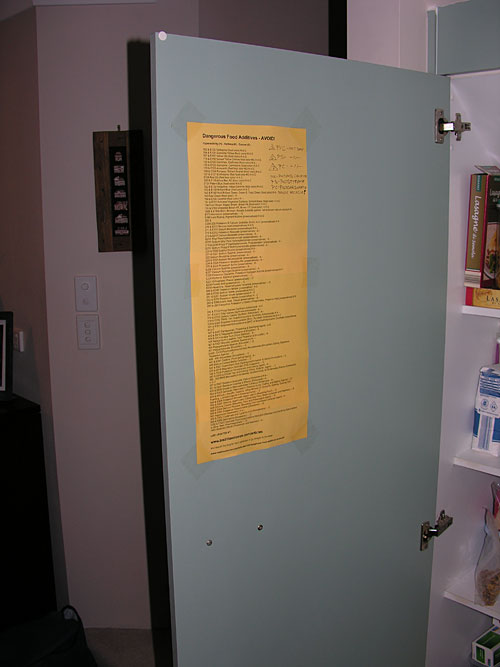
thank you very much for this list of food additives. some of the food containing artificial preservatives or colors we eat is just so bad. we printed the file out and it is stickytaped in our cupboard now ….. and we watch it!
By ben
Great list thanks so much! I just printed it and am sticking it somewhere handy on a wall.
Could you add the 330 additive? Somebody in the shop told me it’s dangerous but I know for sure it is ok additive.
By Matthews
matthews, agreed 330 is all right. it’s been added on the page now . i guess it wasn’t included in this table as it contains only food additives that are bad. the citric acid is not among those . Thanks for the comprehensive code breaker list !
By Jill
@Ben, @Matthews, @Jill,
Thank you for visiting and for posting your comments. Hope to see you some more!
By Rado
Your site- traditional oven is excellent site, respect.
By mum
[…] 10 Oldest .com Domains in the World by Colin 3. 5 Great Ways to Lose Page Rank by P. Biscuit 4. Dangerous Food Additives to avoid by Rado 5. The Right Way to Get People Clamoring To Read Your Blog by Larry 6. Increase comments on […]
Pingback It’s Time to Appreciate Your Readers
Hey! Thanks for the info. I was actually looking for something like this to sharpen my dieting skills. This will really help to rid some of the harmful things I eat.
By Enhancers
Egg plant, tomato concentrate, hot peppers, spices, salt, sugar, vegetable oil, vinegar. And No Artificial Food Additives (comprehensive printable list) like colors, preservatives, flavours are added in this product, all …
Pingback Vegetable relish spread product rediscovery. Ajvar products by Podravka.
From the latest study in London involving 300 children, they have not performed well at school for the year when the research took place.
Top 6 very common food additives making your kids hyperactive during school hours and elsewhere. All these listed are being added into products as chemical food colouring and the chemicals can be found in soft drinks, breakfast meals, sweets and many other foods not only for children. All of these colours are also linked to cancer or asthma.
code – name:
102 – Tartrazine
104 – Quinoline Yellow
110 – Sunset Yellow
122 – Azorubine
124 – Brilliant Scarlet, Ponceau
129 – Allura Red
By Justin
Can you cross reference these numbers to names used here in the US? here they are called Yellow Lake # 6, Red #4, etc. These dye numbers are not listed as ingredients. I do know tartrazine is Yellow #5, …
By Doug Garoutte
Hi Doug, thanks.
Is this only for food colors (colours in Au.) or do the US particular #’s apply to all kinds of food additives, …. preservatives, flavour enhancers, etc.?
Yes of course I can organize creating of a new table with all the needed cross references and post it in here.
By Rado
I read an article, written by the noble anti-cancer crusaders Cancer Research, that essentially stated that aspartame was safe to consume, Aspartame 951 artificial sweetener. I was really shocked. It just seems that mainstream groups, as they become more mainstream appear to become more compromised. In today’s climate it’s almost as if being concerned about the dangers of the manipulation of food, such as adding sweeteners or GM foods etc. makes one a fanatic that shouldn’t be taken seriously.
When reputable organisations come out on the side of the food industry who are clearly unconcerned about the health of the people who consume their products, it really does make one realise that this is a very serious. Many appear to be bent on stopping at nothing in order to increase their profits. Where will all this end? I am worried.
It is sad to observe that those whose stated objective is to rid us of this awful disease could possibly ignore research that concludes that certain ‘foods’ can cause cancer, & on top of that write an article that condones the use of such possibly dangerous substances. One would expect them to err on the side of caution at the very least & to urge the public to do the same. Is that really too much to expect?
Good luck to those of you who are willing to state the facts & help us to make informed decisions regarding our diet.
By Gary
Thanks for an interesting website. I’ve been doing a lot of research on the internet trying to decipher all the ‘numbers’ and yours is most informative. The chemical companies risk losing millions (if not billions) of dollars if anyone really proves how dangerous these food ‘numbers’ are. Hence there is a lot of misdirection and false information mainly influenced by these clongomerates protecting their $. That’s why they don’t use the same name for the chemical additive or number all over the world to make our life more difficult in trying to work out what we should and should not eat.
By Chris
[…] TraditionalOven.com – Dangerous Food Additives to Avoid. No references but a well laid out table indicating whether each substance has links to hyperactivity (ADD), asthma (allergies) and cancer. […]
Pingback Best Lists of Food Additives and Preservatives
The article is very informative for food additives which might lead to serious health disorders. It is better said that the prevention is better than cures. This is the lesson which I come to know by the post.
By four poster bed
It should be noted the 123 & E123 (Amaranth – red food color #2), when listed just as amaranth, can also refer to a wholesome plant used as a leaf vegetable, cereal, or ornamental and whose seeds can be ground into flour.
By Sherry
Great list of dangerous food additives. It is scary that such a long list could be compiled and that they are often in foods that we eat.
By pays to live green
I have just had a life threatening allergic reaction to enhancers E635 and E621. These food enhancers should be band all over the world. Symptoms were, Swollen toungue, swollen face and lips and huge itchy red welts and rashes over my body.
By June
Thanks so much for the informative list dangerous food additives. We really have to keep on top of these for our children’s sake. I can see the reaction within one hour if my daughter (4) consumes some of these additives – the result is very ugly and it completely changes her personality. I am now also seeing evidence in my younger son’s (1) behaviour as he begins to want different foods like other kids.
So a big thank you for making it easier for me to stay on top of these terrible additives.
By Carly
Delighted I came across your site.
Compiling a list of nasty food additives for my book
“The Culinary Caveman: A Survival Guide To The 21st Century”
Shall be referencing your site for sure.
Keep the faith the revolution is very close.
Positive regards from the woods in the UK
Namaste .. The CC
By Culinary Caveman
Thanks for the info keep us posted on such harmful substences.
By khalid
The list of all the dangerous food additives, preservatives and artificial food colors is great, as is the printing version!
Convert’s last blog post: Weight and Mass units converter
By Convert to units
Hello again! You were the first port of call for my research on preservatives and I thank you for the information. You also helped me out a while back with your very helpful advice on prevention and healing of cold sores. I tried the lemon balm – good results. My recent attack didn’t develop beyond the first tingles and first symptoms. Diet – avoidance of certain foods and boosting my immune has certainly helped. Many blessings to you!
Added by admin; Paula, thank you for your lovely feedback. Warm regards! r
By Paula
thanks for this list, now maybe mom will stop using food coloring for anything she cooks. and try to avoid as many of these artificial or synthetic additives as possible.
By susan
Thanks so much for this information. I am publishing an article on my blog titled:
“Serial K i l l e r s vs. K i l l e r Cereals”. Drop by sometimes…
Regards, Ron
By RON GILDART
i know im asking a lot but is there some place i could find the list of good food brand names thank you
By Diana
Pls. send me for what are these products representing these E-numbers in wording like yellow etc., that can be harmful and effect to our health and how these ingredient or formulas form? thanks
By ronnie
Thanks for such a great list of codes concerning the different food dangers. How did you know and find out about the numbers represent an artificial ingredient in a food, or color for each chemical additive? I believe the whole word needs to go to all natural foods only like organic or bio dynamic and raw foods.
By Cynthia
I am working on a project which requires that i chose the right non dangerous or unhealthy preservative for various food items and i will be grateful if you assist me by providing drinks and the common preservatives which possibly can go with them.
By GEORGE
Thank you so much for these valuable information, regarding chemical food additives as artificial sweeteners, preservatives, colors or chemicals for creating flavors in foods.
By Fengyi
Thank you for the list of dangerous food additives. It has opened up a whole new world for me and my family.I went through my kitchen cupboard and got rid of all the dangerous foods I could find. I am wondering though why you didn’t list high fructose corn syrup or autolyzed yeast extract on your dangerous food list ?
Mary Ellen
By Mary ellen
[…] Preservatives – My Journey to being healthy, pregnant and toxin free. dangerous food additives […]
Pingback Preservatives
Thank you very much. The information is very useful. I am going to print the food additive numbers’ list and give it to maximum number of people.
Thank you
By Dr Ashish Semwal
[…] Skadliga tillsatser i mat […]
Pingback Kristoffer Hell » Universums Härskare
Wow, you cannot believe how much this article has helped me! Now I can ensure that food in cafeterias, in the residence hall I work in, do not contain these substances that are harmful. If this is the case for adults, then how about children. I can only imagine how bad it must be for little kids. Thanks a lot!
By CaliforniaGirl
[…] front, but some names are different). There is useful information on the dangerous food additives here, and […]
Pingback Understanding food labels | eatingandhealth.net
Many times we bought meat sausages that are coloured with 6 types of food colour 102, 110, 122, 124, 133 and 155.
My wife never smoked but died from bowel cancer. Artificial food colouring is probably much more dangerous than cigarets and deserve warning at least for cancer.
By coloured meat sausages
You should only use E252 for making rockets! I am going to reduce these E numbers from my diet. Thanks
By Potassium Nitrate
Thanks for this information on unhealthy chemicals added to foods for us consumers to eat and their E numbers. It is indeed a great help for us. We have known what are the food additives which have to be avoided from the diet.
Thanks! Keep informing the people.
By hazel
Great, i used to get a bit destructed from drinking too much cola, e numbers are not good for you!
By Sleigh Beds
I was told many years ago e330 can trigger cold sores if you are a sufferer. Ever since I have tried my best to avoid e330 and my coldsore problem has drastically reduced – until I started drinking certain brand of Irish Cider! which I suspect contains e330 – so if you are a sufferer like myself check your labels – European Sprite also contains e330 which may be why you get them when you go to Europe – once I stopped drinking soft-drinks on holiday I stopped getting coldsores.
added by admin: I did hear many times about E330/Citric Acid in many cases is the worst active ingredient for the onset of cold sores, and is harder to avoid getting cold sore blisters after consuming e330 citric acid food additives and e330 based/containing food flavors.
By e330 - coldsores
my friend and her daughter both suffer red welts and severe itching if they ingest e330
By e330
[…] varieties of food additives consumption has on our health? CJG and I don’t (by this way, we found this a very user-friendly tables with artificial food additives to avoid […]
Pingback Why we’ve decided to stop buying food from supermarkets | Making Sense of Things
I appreciate this food unhealthy additives lists not to eat. I will print it out and bring it with me everytime I go buy groceries for I won’t consume any dangerous chemicals anymore!
By turks and caicos villas
Thank you very much, we all need this information about dangerous food additives that are being listed and added to food products globally in shops around the planet.
By thx for the food additives list
Excellent foods additives list! this rocks big time!
By Peter
[…] For one comprehensive in full printable list of dangerous food additives in food, go here. […]
Pingback The ‘Skinny’ On Diet Soda « Healthy Life Harbinger
Thank you for this wonderful additives list it’s exactly what i need for my paper this is much easier than going through 500 pages with most of them blocked by the school filter anyway.
By Andrew
Hi there,
Really appreciate this comprehensive list with all food additives. It would appear that this is rather classified information! Its as though nobody really wants to spill the beans! Would like your permission to add this link to my site, blogs and ebooks.
I have recovered from various digestive diseases and ailments by avoiding artificial additives and preservatives to start with. Many (if not most) diseases are a direct result of a poor eating plan (do not like the word diet, it makes me feel deprived).
By Sharon
I have print them out on the list and now I watch all of these names and numbers of bad artificial food additives or chemicals on products packaging not to put any them in my mouth any more. I sleep and feel so much better since I’m stopped consuming the hyperactive preservatives, flavors and food color chemicals. Thanks a lot for the list I believe and I know I’m heading in the right direction! Scott
By All the names of bad food additives.
Thanks for the list. Great job.
One thing.
Aspartame – On the list it doesn’t say that it causes CANCER. I am pretty sure that it DOES. Aspartame is Bad ! BAd ! Bad.
I could not believe how they poison us in everyday food. Shocking !!
added by admin: Thank you Marta, definitely one has to be cautious with what we eat not to damage our health – I know what you mean. Do you know of any other document like this suggesting gov page about aspartame and cancer studies?
By Marta
Thank you guys for this web site, I am a guy who eats. A lot of gum now because of you. I will stop eating these silly not good unhealthy stuff. Respect.
By Ricardo
Excellent listing of colors in food. Ever since coming off my healthier eating diet (which involved avoiding these colours) I now find that these colourings make me emptying bladder ALOT as my body is trying to remove them from my system. These are all morally wrong and who knows how harmful and they should be completely banned from food chain world wide.
By TheJay
hey.. thanks 4 ze info.. it’s really useful for healthy living and wellbeing … i will surely try to ignore all these chemicals in my food from now on … poor children eat lots of these artificial food colors and preservatives even flavors ingredients because they are being given them..
By Zainab
The information above is good. However, citric acid is a weak ORGANIC acid. You can vertually find it in any sour fruits and vegetables, like lemons and even sour apples. It is not artificially made. So you cannot say that citric acid is a food additive. This is a good topic, but a weak argument. :)
added by admin: Dear Sarah,
Thank you for your note. Yes I agree with you fully/completely. But, have you seen the 2 paragraphs above in this article, right at the beginning on the page. This is related to basically badly produced, only the artificially made, citric acid; starting with 4th paragraph … “How about the Citric Acid E330 or 330? No problem with naturally occurring citric acid. Artificially produced E330 or 330 additive, depending on where or …” please find it. It is not mentioned in the table among only harmful additives, however it’s explained in the text. Some people might get into nasty troubles after taking citric acid in such dirty form. Actually there is one comment here about it also. Please let me know when you see it.
By Sar1555
Can some one help me please, I have had listeria monocytogeneis detected in two of my products and the only comman denominator is a yellow food colouring from S.O.P ( there code number S7752) I have tried to research this number but can only find CH1106 , I have researched other colours and the only one I can find close is tartazine 102 sunset yellow.
By listeria in yellow food colourings
Thanx for compiling and sharing this informative list, it will be most useful in trying to improve our diets. Much appreciated! :)
By Monique
Food is the basic need of humans and if healthy food is not in-taken then the consequences may not be what is expected, hence we should avoid eating junk and dangerous foods and double check the food quality that we are eating. Take a good care of your healthy lifestyle and well-being.
By Healthy eating healthy lifestyle
Natural food flavourings are the way forward. Artificial and unhealthy food flavors are rapidly fading away one can finally notice on products in shops. Customers know what is good for their digestive system and each human body organs and cells.
By Food Flavourings
[…] dangerous food additives […]
Pingback Preservatives, What are they really doing to our body? « renssuperawesomepage
[…] Traditional Oven offers a comprehensive list of food additives people should avoid eating. I encourage to A) serve as many whole foods as possible in your home, and B) read labels on food products […]
Pingback Color Me Crazy: How Food Dyes Effect Your Children | Mother Fitness Revolution
Thanks for this great list. But I’m wondering about carageenan. When I lived on the coast of Ireland, we used carageenan moss that was a kind of seaweed to make pudding, etc. Is this not the same as the carageenan that’s used commercially? If so, what’s the difference?
By Carageenan
I think certainly the wholesome carrageenan moss that you used to use to make puddings (I must say to me the pudding sounds very tasty) could have been all right and very healthy to eat. Especially if the carrageen was in the form as is when taken out from a sea water. Many food additives are not dangerous. It comes to what is used and how commercially made additives are extracted and prepared. Other chemicals might be used to manufacture food additives. Also the well known MSG is taken out from rice (prior to that altering the rice was natural.) Or you would have certainly heard of aspartame (artificial sugar substitute and non saccharide or non saccharin sweetener) which is also derived from natural plants, natural decayed plants that is, which were stored by nature under the ground for so long they turned to oil. You can see not all natural sources are healthy. However in relation to the carrageenan – 407 and E407 Carrageenan ( thickening and stabilizing agent ) – asthma and cancer – I am not sure whether I can post web links in here, but simply search on the web for “Cancer research, Filament dis-assembly and loss of mammary myoepithelial cells after exposure to carrageenan, by Joanne Tobacman”, and “Cancer detection and prevention, Carrageenan-induced inclusions in mammary mycoepithelial cells”, and then “Consumption of carrageenan and other water-soluble polymers used as food additives and incidence of mammary carcinoma, medical hypothesis, by J. K. Tobacman, R. B. Wallace, M. B. Zimmerman”. There are other related studies on the same subjects, for instance; exposing human breast tissue cells, intestinal cells and prostate cells to carageen additive for short intervals in low concentrations, may be relevant to the occurrence of an invasive malignancy.
By zena
Shall I use this, Sodium Chloride, Sunset Yellow FCF (15985), Carmoisine (14720) —-+ INDUSTRIAL RAW MATERIAL. Dye Content: 31.0% to my hot beverage drink to get dark colour (ORANGE RED POWDER IH 7802). Thanks.
By ravi
I have a sulfite allergy and also avoid citric acid as I linked it to mouth ulcers, but I never realised the link between the two! There is one thing I would add to your list E150 caramel is not marked as “A”. I have no problem with E150a, plain caramel from sugar, however E150b Caustic sulfite caramel and E150d sulfite ammonia caramel are both definitely an Asthma trigger for anyone who is affected by sulfites.
By Jon
[…] The Effect of Food Additives on Your Child’s Health and Food Additives Codes and Warnings. Dangerous food preservatives, colors, flavour enhancers to avoid eating. Fighting Food Additives! Avoid Them For Optimal Health Alkaline Made Easy. Citric acid, 7 Day Belly Blast Diet […]
Pingback Food Additives Effects
Info on health (dangerous food additives)
Pingback information on health
Thanks for the food chem additive list. I have finshed my assignment.
By Bob Keithley
[…] a complete list of bad chemicals, some put into food products, including a printout sheet for reference, please see Traditional Oven’s […]
Pingback What’s in our foods? Preservatives you should know about | | Mind your Body and Soul
[…] How to Get Slim and Healthy, watch Food Safety and Standards ( Food Products Standards and Food Additives ). Regulations, Food Blogs – Top Rated Food Products – Soda Sparkling Water Maker – Food Additives and their Codes. Dangerous food preservatives, colors, flavour enhancers to avoid eating. Citric acids and different other chemicals […]
Pingback How to Get Slim and Healthy: Read What You Eat! | Slimming
[…] Food Additives Codes. Dangerous food preservatives, colors …Mustard, Poppy Seed, Pepper, Preservative (21/x, 202), Red Peppers, Spices. ITALIAN DRESSING Water, Vegetable Oil, Soy (Antioxidant 319), Sugar, White … […]
Pingback Preservative 319
Just check the harmfulness of the suspect additive – before buying given food. I use app E-Codes on my phone to doing this. But there are many others.
By Arthur
I noticed your list did NOT mention sodium benzoate as cancerous. But if mixed with ascorbic acid, it creates BENZENE, a known carcinogen. Of note, ladies: Centrum brand Materna (prenatal) vitamins contains both ingredients. Please share this information!
By Susan
Hello, and thank you for the dangerous additives list, my question is due to soy intollerances in my family, is/are there a code number/s for soy additives?
By Wanda
Thank you for sharing the e-list for food additives, I have been searching for one!!!
By Diana
Hi, I would like your permission to use your food additive list to create an open source application that supplies information on demand? Also, do you know of other lists where the information is in a spreadsheet, csv or database etc.?
added by admin:
Hi Roger,
This information is from my partner’s work, not open source so I cannot give you the permission. But if you like or if it suits -you can directly link to this dangerous food additives to avoid page on traditional oven, if needed. You can print out the e-list for yourself, known numbers (being updated) by using the print link above the table with food additives and use it for your personal references or well-being. Thanks for the note.
Warm regards.
By Rado
we have 3 children who eat heaps of fresh fruit, vegetables and meat in their daily diet, we went out today where they consumed a flavoured soda and a soft drink and won some CANDY lollies (they had about 3 each) have just got them to bed at 11pm!! they were all so full of energy and studidly crazy tonight – so much so that i looked up the contents of the candies and found the numbers E129, E133, E171 ?? not listed? and E330 (I know in fizzy drinks) it sent them totally hypo with no doubts – i will be sticking to fish, eggs, meat, pasta, rice, veg and fruits for their diet – and no ruddy yucky CHEMICAL FOODS from now on. xx
added by admin:
Hi Sally, thank you for your note! If something is not 100% safe I don’t want to go near it. What we put into our organism as food is one of the first things we should watch.
I looked up the E171 additive, it is already completely banned in Germany. PubMed.gov mentions, there is a whole paragraph about E171 food additive ( Titanium Dioxide, TiO2 ), the language is quite technical, but so far they say that E171 can even alter DNA. An oxidative lesions were measured (changes?). The article is very current. I wonder, is this the nano Technology, nanoparticles of titanium dioxide go into foods? Nano-particle sized matter may penetrate body tissue.
I also read that from exposure to titanium dioxide – TiO2 – nano particles, a person experienced in lungs a type of pneumonia, interstitial lung condition/disease Bronchiolitis Obliterans (BO) with Organizing Pneumonia (BOOP) (I do not know how it was delivered to his or her body). After consumption it can be found in human lymphatic system as it is hard for our organism to break it down. We can think about it also this way; lymphatic system is slow, then this e171 basically travels around slowly through our body because human body does not know what to do with it.
Well, it is used as pigment to give certain foods opacity, white opaque color. Otherwise it’s also mixed into other products, where it also could be referred to as Titania or titanium IV oxide. E.g. it’s been used as UV absorber in sunscreens, plastics, paints and coatings, paper, or some toothpastes. I will look at the other 2 E’s.
By sally
[…] Codes on Foods various products. Dangerous food preservatives, flavor enhancers and food coloring to avoid consuming. Citric acids and other Food Additives Codes collected in comprehensive list for printing. […]
Pingback What to Eat When Pregnant: Important Nutrients. Healthy Eating In Pregnancy
Thanks for this list and information on dangerous food additives. This is a concern I share and am very careful myself about ingredients that are added to the food I buy. My philosophy has always been if you can’t pronounce it should you really be putting it into your body.
Michelle
By Michelle
[…] Food Additives Codes. Dangerous food preservatives, colors, flavour enhancers to avoid eating. Citric acid … […]
Pingback Preservatives and Additives Can Affect Allergies | First Aid Products
Thankyou for your very informative list. Although I was given 341, 363, 478, 904, 1442 as ones for my son to avoid as well and I could not find what foods they are in which makes it hard. The sad and disgusting part of all this is that our government allows these poisons into our foods which is pathetic. Ban all these and I would imagine all of our health would improve and why should we have to do the governments work in looking at every packet of food to make sure we are not being silently poisoned. Yes these additives may preserve the food and in fact studies have shown that if someone has died and if you checked their body in ten years time it would not have broken down because of the amount of preservatives so yes not only do they preserve the food we eat but preserves our bodies when we are gone but silently kills us in the process. What a lovely world we live in. Thanks again.
By Saddened and disgusted
The Lord directed/sent me to this web site! Concise and detailed information regarding these food additives. Kudos for making this public and for the all the research that went into compiling this literature. Everyone should carry this list with them; we are blind to the dangers involved with all these ridiculous chemicals. To all who posted, my heart goes out to you. I know that chemicals have contributed to many of my mental and physical conditions.
PLEASE be cautious before any surgical procedure. Most preparatory solutions used to cleanse, disinfect and/or mark the exact surgical site contain red dyes. Inform the anesthesiologist and surgeon BEFORE you undergo surgery. Also, red dye may be present in intravenous “tracers” used in CT /MRI/nuclear medicine scans that enhance the suspect area. Speak to the MD/radiologist performing these tests BEFORE scanning.
My thanks and appreciation for publishing the facts, and warnings! God Bless all!
By Sherry
Thanks for warning us for the list of poison we are consuming daily in our market preserved foods. The money greeders big co. are accumulating wealth by giving us such poison which will longlast in our coming generations and make all of them ill and weak. Who will be left to take care of that wealth then?
By arun jain
[…] Food Additives to Avoid dangerous food additives […]
Pingback MMS: A Miracle Mineral Supplement against Malaria, Cancer, HIV or a Scam? « MyQute Health & Personal Views
I just ate about 6 tinned chillis with E330. I was feeling fine then suddenly in seconds I got bronchconstriction which led to a severe asthma attack! It was terrible I almost died, who knows where this particular e330 came from. ASTHMATICS KEEP AWAY FROM E330! Some can be dangerous.
By Ramey
I am from the United States and currently researching how synthetic food additives in our food supply in our country is affecting our health. It is frustrating to me that our FDA won’t remove these harmful additives and those that are not necessary plus unhealthy and replace them with positive additives that are known to be safe for that purpose. Thanks so much your site it is most helpful! We have to do our own research especially when it comes to healthy life and what we eat!
By Angela
Food manufacturer’s to make their product attractive to kids use harmful colors. Lollies and sweets and even fruit drinks for example. It’s about time goverments put a stop to this to protect the health of our kids.
By rino
[…] Food preservers and colours – dangerous food additives This entry was posted in Current Health […]
Pingback Dying Slowly with Cigarette | shantzey.com
[…] dangerous food additives […]
Pingback Preservatives | Make It Personal Fitness
[…] originally baked so it could be good and healthy enough for sick patients in hospital. This is a list of some of the chemicals in processed food that we should avoid. Man, if I’d known earlier, perhaps I wouldn’t be getting my asthma attacks so seriously severe […]
Pingback Eating BAD food « A Mother’s Monologue
THANK YOU very much for the valuable information on food additives and E Numbers for all artificial food additives. Surely, some of them are just like poisons.
By Bieber
Read the labels! Speaking from a normal diabetic perspective, consume most things that will spoil, but eat them before they do! Natural as can be, however, even drinking water from various old faucet has metals and chemicals in it, chances are, not much is safe! But we can pray over our food and drink for a miracle that the gifts we receive are safe to consume, no matter what is in them.
By BAZ
Often hardly anything is done about unsafe commercial food supply because it goes hand in hand with healthcare. If people are well, logically then they don’t need medicine or a doctor. If people are healthy, clear thinking, physically strong, think of the possibilities!
By BAZ
Just to let you know, Benzoic acid which you list as a carcinogen is used to prevent spoilage by many families in rural India. I was told this by an Indian colleague (with a PhD in chemistry). He was from the Dargeeling area of India and he said that there was no refrigeration in his home and they added benzoic acid to their food to prevent spoilage. He told me this was common practice where he lived as a child.
added by admin:
Hello thank you; Please search for ascorbic acid (Vitamin C), or with other acidic solutions e.g. vinegar, in combination with 211 & E211 sodium benzoate (210 & E210 Benzoic acid is a close relative – more below.) When these react they may create a small amount of chemical which causes some cancers, one of them is leukemia. Although apparently the risk of cancer is very small, why would consumers have to experience these risks, there is no need for that.
Various producers had to stop using sodium benzoate as food preservative e.g. in soft drinks, carbonated drinks, fruit juices or pickles, etc. Some producers did use the benzoic acid / sodium benzoate for ages for preventing microorganism-s growth in acidic kind of foods. The naturally occurring clean Benzoic acid substance (in plants or in animals) look to be quite fine although they might still cause asthma, hives, and alike allergic reactions in individuals who are sensitive to these substances. But then there are the artificially produced (cheaper) substitutions for natural substances.
By Oldman
I have been having the worst stomach aches this passed year and I could not figure out what the heck was going on. Then today when I was in the car it hit me. The food preservatives are killing me. For when I eat natural foods with low ingredient content I do not have such reactions. Therefore it must be the preservatives. Thank you for sharing this page with me I really appreciate it.
By Leiya
Good to see such great information here helping people. However there is more information on what is good for your health and what is definitely NOT good. There is a list of ‘clean’ and unclean’ foods in Chapter 11 of the Book of Leviticus in the Bible. Just putting this up there for those who truly want to add even more great health to their lives. For instance Cochineal comes from the insect which God considers unclean, so do not eat it. Pork and prawns are big No-no’s, for a good reason. Prawns and shellfish trawl the bottom of the oceans cleaning up the waste products from the ocean life. Our bodies do not process this waste well. So much more I could say but if anyone here is serious about their health check out this chapter. Blessings to all and process foods a bit less.
By Deanne
Hello. Your list is wonderfuly instructive. Thanks very much for posting it. I’m writing a book tentatively titled, “What The Heck’s IN This Stuff?”. Your list would be very helpful to me. I would also love to converse with you- I don’t pretend to be an expert- I recently ‘woke up’ to this horrific danger, and am on a learning curve- I happen to write as well. I’m published, so maybe I can swing another one. Thanks, Michael Winter 618.392.4601
added by admin:
Hello Michael,
Thank you for your comment on the food additives page. Please let me know what would you like to converse with me about? Feel free to do so. You mentioned that you “woke up to this horrific danger” and therefore I assume it is in regards to that. Are you directly involved with welding metals on the casings, an exposure to fumes from a welding? Just guessing. You can send me email, so please do so.
With compliments.
Rado
By Michael Winter
Hello Rado,
Regards welding, etc., I own a small steel pipe company- irrelevant to this. The horrors I ‘woke up’ to are the processed chems in almost everything we touch, eat and drink. I would like to pick you brain on a few things as relates to that. You obviously know a lot about it. I am learning more every day, but have a ways to go.
Thanks,
Mike
added by Rado:
Hi Mike,
There is loads of excellent literature on these topics available. And also DVD movies I believe. All produced by the right people. Chemicals or too much improper sweeteners and alike in foods aren’t helping us at all. I am also sensitive to several additives some of which give me nasty attacks. And as you mention not only to the wrong chemicals added into foods. Took a long time to come to a realization, often it can be tricky to notice where the problems lie, most often these connections might show or react not so obvious. Perceiving such a thing, that a person could be sick and getting more ill from what he or she eats, is rather weird.
Took me a long time to get used -to cook meals from, or consume, mainly raw foods. We have been eating 100% only organic now. It doesn’t cost more, it costs less on wallet to eat organic only. Because of the amount of proper nutrients we eat a lot smaller quantity (not just marginally). Juicing for instant is marvelous, in so many health and healing aspects. Plus, apart the possibility of treating various health issues, one glass of organic juice keeps me going half a day. Vegetables in, rarely sweet fruits (max half green apple in each glass.) There are good books and DVD movies on this as well. My partner is engaged in this as nutritionist.
You probably mean also the chemicals found in other products and items we come in contact with in life, not just food.
* Steel pipe company owner sounds great to me! I knew that.
By Michael
Thanks for this superb information; I often search Additives Code Breaker by M. Hansen for additives and it is good to find it supported by your article. I wish EVERYBODY should be aware about the chemicals in our food.
By Herta
[…] Concord Grapes (with pesticides), Corn Syrup, High Fructose Corn Syrup, Fruit Pectin, Citric Acid, sodium, GM genetically modified […]
Pingback Champagne Grape Jam | Mind Reader with All the Answers
[…] Hear products that contain some toxic chemicals. What are these chemicals that we should look out for concerning personal care products or even in food additives codes. Damaging kinds of chemicals found in nowadays hair dyes. What chemicals should one look on for on product’s labels to protect hair health and so for the whole body? […]
Pingback Damaging chemicals in hair dyes.
I have been eating healthily for a year, growing my own organic food, and eating mostly whole foods only, with a lot of raw. Yesterday I had a weak moment and bought a bag of ‘Mr Mallow’ marsh mallows. If I had bothered to read the label at the supermarket I would not have bought them. They contain corn syrup which I have never, to my knowledge consumed before, colour (129), and flavours (with no number). How can they just say ‘flavours’ with no number? Also, they are imported from overseas. I am suffering now with my first migraine in 2 years, and it is all my fault. NEVER AGAIN. Whole, organic and natural is good. If it comes in a bag it is POISON.
added by Rado:
I hope your pain stopped! Try not to eat cheese and chocolate as well, these contain a chemical (not on top of my mind right now) which initiates migraine episodes. Organic, raw and whole foods, I am on such for ~ 2 months now. It’s more interesting. No caffeine either. The first 2 weeks I didn’t know what to put into my mouth. But now, all those gr8 goodies like coconut yogurt, fresh organic certified vegetable/fruit juices I prepare, various sprouts breads and so on; I feel so much better, sleep better, lost weight, cannot complain at all. It’s actually more affordable with this organic nutrients due to the fact that I eat smaller quantities and even-then it’s plenty in the nutritional energy sense. No meat but I take Folate B12’s supplement one per day. * I also made an error the other day, got myself a nice soy yogurt 200g, and only after I finished it all I noticed high sugar added (13.5g out of 100g / 13.5% / probably cheap white sugar kind) – my system immediately protested which made me to read the ingredients list – the yogurt came from a health store where I shop!
If they just mention a ‘flacour/s’ on a packaging I don’t eat such product as it can be just about anything. Manufacturers aren’t required to disclose flavours if they are the product’s marketing secret-recipe, as a protection for no one copies it easily.
By 129 + corn syrup = migraine
[…] Oven cooking related website offers a comprehensive and updated list of bad food additives to avoid. I encourage to A) serve as many whole foods as possible in your home, and B) read labels on pre-packaged food products and processed foods planed to purchase for children. […]
Pingback Linking Hyperactivity and Food Dye | LesserEvil Life
Food colouring 122 is on the list. It is derived from COAL TAR. Think about that: would you let your child suck on a piece of coal.
Great list Thanks.
By Laotzu
I am not sure if this list is well researched. Quinoline is used as a powerful anti-cancer agent (many scientific articles available). Here it is listed as causing cancer. I think the list would be infinitely more useful if you also publish the research articles on which the list is based. Thanks for your effort!
added by Rado:
Dear Dnarb,
Thank you for your note and concern. Where are you writing from, Europe? I suspect you had in mind the second generation Quinoline, the Quinoline substance which is not used as food additive … am I right? More than one source, or several sources, for every listed subject were/are used. Here is one reputable instance regarding Quinoline information you were interested in, if you would like to look at more reasearch then it could probably be one place to start at.
As the start of this page mentions, this is a guide only, everybody can look deeper into it and conduct individual research. We welcome and are opened to any additional information, suggestions or further help that could be of assistance in informing others.
By dnarb
For those asking about the US food dyes names vs. food color numbers, hope this helps.
USA – Artificial colors permitted in the USA
FD&C Yellow No.5 Tartrazine [102]
FD&C Yellow No.6 Sunset Yellow [110]
FD&C Red No.3 Erythrosine [127]
FD&C Red No.40 Allura Red AC [129]
FD&C Blue No.2 Indigotine [132]
FD&C Blue No.1 Brilliant Blue FCF [133]
FD&C Green No.3 Fast Green FCF [143]
Thanks for the list! Now if I can only get my mom to understand the dangers of all these additives. She watches my son and constantly tells me there is nothing wrong with the food she feeds him! “I raised you kids on this food and you turned out alright” Did we really? My brother suffers from severe panic attacks and I have had bouts of medical problems my whole life. Finally woke up to all of this. I can’t wait until we minority of awakened ones becomes the many and the government finally wakes up to our wants instead of big pharma and food industry!!
By Heya
[…] Some friends and customer of mine also have a wonderful article to read for more info on dangerous additives as well. Please check out dangerous food additives […]
Pingback The Chemical S**tstorm We Call Food | The Healthy, Allergy Free Home
I am allergic (suffering different discomforts) to various allergens contained not only in foods I eat. Why do the manufacturers even put some of those highly processed or chemical additives into their products? I am sure there are much better options instead of the “modified food starch” and alike -it doesn’t even taste good.
By Rado
A corn syrup, hydrogenated fats, nitrates/nitrites, MSG (and it’s 27 different names), etc. The endless list is so exhaustive there are entire websites that list them and their negative side effects on perfect human health and healthy life.
Pingback THE POISONS IN OUR FOOD SUPPLY « well2day
Here’s a list of food additives that have been shown to cause harm to people and are not banned yest in all countries. This one was discovered 2 days ago (First 3 minutes or so). A very good list with/of food additives. Another list of chemicals found in food products that includes other diseases. Tartazine: Dye that a majority of the population seems to be allergic to.
Pingback Smoking - Page 31 - EvBoard - Evanescence Forum
This is an awesome detail! Do you know anything about carboxy methyl starch?
A starch ether with solution are in nature alkaline products sometimes replacing Sodium CarboxyMethyl Cellulose.
Thanks!
By Marie
We shouldn’t eat food that has been dead/picked/harvested for that long? With artificial food additives? So what do we watch for when it comes to bad food additives? This E numbers’ list is ENDLESS, and you can’t possibly memorize this whole thing, so I will print it out and for now pick/focus on the wrong food coloring.
Pingback Week 6: Read the contents FIRST. | healthnudge
Food additives E numbers/codes. Dangerous unhealthy food preservatives, colors, flavors – 127 & E127, Erythrosine ( Red food color #2 shades for foods), H, A, C. E128, Red 2G – Red food color, Hyperactivity, Asthma, Cancer. 129 & E129, food color Allura Red H, A, C. E131.
Pingback Artificial Colour 129
I just discovered that the salad I thought was healthy has terrible additives in the salad dressing & croutons. THANK YOU for sharing!!! Cancer runs in my family – I am SO motivated to avoid these toxins & eat healthier!!
By Lana
With Thousands of Food Additives and Thousands of other Chemicals around us our Immune system can Not keep up with the onslaught.Every one wants to get and stay Healthy needs to learn what we are putting in our mouth.
We need More clean Filtered Water every day. Also we need to get the harmful caustic Store bought Home Cleaners out of our home, and use only Safe Natural Cleaners which also do not pollute our water sources.
We are what we eat and Drink and Breath. We are what we think.
By Lee Carter
Hello,
I am curious if the following are dangerous or to be avoided…
E4601
E468
E466
E570
E470b
E551
E322
I would really appreciate the feedback.
Regards
By Michelle
MSG is not actually toxic; though that is common belief it is actually a myth that has been repeatedly disproven. Although it is not toxic some people could be allergic to it.
Please do your research. I would have thought your little food additive table was quite helpful but now I don’t know whether to trust that either. I probably can’t.
Added by admin :
Only the copied content in this comment which came from this linked page on wikipedia was removed; however all the original paragraphs are available – located in Monosodium glutamate – MSG information page on wikipedia.
By SneezyBear
Hi SneezyBear,
Thank you very much for your comment. “Together we will travel much further.”
I made note of all the points and considered them all. I thoroughly red that page/info on wikipedia you perhaps sourced your knowledge from. Are we contemplating naturally occurring glutamic acid in nature here (e.g. mothers and animal milk, meats, other protein products), or the manufactured glutamic acid (MSG)?
Given that wikipedia is probably not also yours first and last stop for all learning nor the only source of information, because of its humongous size to keep updated constantly, the confusion is quite understandable. However, your valuable feedback leads me to hope that my comment is helpful rather than annoying.
Please have a look into the content on the page linked below. A bit is mentioned on the page regarding to manufactured MSG and then further referrals. Worth to be informed about, perhaps if still needed. I also have other source on MSG (produced) to consider I could share with others. It’s not a secret. But, as always, same as with many other aspects we come into contact with in this fast live we live in; some things might never harm one individual in any way but such can be right the opposite for another person unfortunately.
msgtruth.org
Note the link to PubMed (gov) under braking news in the article ncbi.nlm.nih.gov pubmed , and next there is additional reading on asthma plus ADD, ADHD and so on in the right hand side manu, plus the home page.
I agree we should be always opened to fresher updated news discoveries and suggestions. PLEASE let us know of anything new or interesting you may come across with. The published findings are gradually becoming less conflicting so is it worth the risks? I wish these findings open doors not only to the irresistible taste MSG additive gives to processed foods but also to a possibility of health harm. Regulations of many governments already require to list MSG content on all food product packaging’s. isn’t it a neurotoxin as well!
We are not biologically programmed to resist what is put out there for us to process, neither certain foods nor opinions.
Worth to watch this footage till the last second:
By Rado
Another interesting reading in relation to msg – in relation to msg on evidenceofmsgtoxicity in blogspot.
By Andrew
[…] Traditional oven has one of the most extensive lists of food additives to avoid that I’ve seen, plus they provide a printable option! […]
Pingback The Inconvenience of Convenience Snacks - Eat Your Beets
Thanks for this superb information; I often search Additives Code Breaker by M. Hansen for additives and it is good to find it supported by your article. I wish EVERYBODY should be aware about the chemicals in our food.
By Vishnu Yogacharya
To those of you who are thinking of taking this list to the grocery stores, I don’t think you’ll find many processed foodstuffs that don’t have more than one of these additives to avoid in the label. My understanding is to eat foods that don’t come with a label or in a box with a shelf-life, don’t eat the Dirty 10 unless it’s either certified organic, or organic from a known source, and most canned foods are suspects so read the label. There’s much more, I just can’t say it all!!
Namaste
By MISSCUS
Thank you for this valuable information, it will be most helpful for many people. Incidentally, I was brought to attention to this code recently, E955 also known as sacralose. It was stated as a form of addificial sweetener, can anyone shared with me if this chemical substance will consider a danger to our body? A friend introduced a new product to me, a 100% cane sugar extract, only ingredient called E995. With zero GI (glycemic index), zero carbohydrates, zero fats, zero cholesterol. Is it even possible? I’m baffled. Thank you.
By June june
[…] search for those numbers on the product ingredient panel), preservatives, unhealthy chemical colors and flavors – as a consumer do you really like consuming hidden chemicals which are only acknowledged by mystery numbers? It is also usually very high in carbohydrates […]
Pingback Blind Freddie Can See This One Coming | Just ME in T's Health Stuff
I’d like to see this list of food additives alphabetized.
By Cem
One superb list of food additives.
By Ganesh
So Healthy Tips.
By Amrit
Hello, and thank you for the dangerous or unhealthy additives list, my question is due to soy intolerance’s in my family, is/are there a code number/s for a potentially unhealthy derived from soy additives? As in food we eat, not the soy used in cosmetics.
By Wanda
Is it true that when an additive gets recognized as dangerous the food companies just change the chemical composition a bit and call it something else? i.e. E220 preservative might now be called Food Acid 330?
By Aardy
I found these numbers very helpful to me and my family. My son (6 years old) has just been diagnosed as having ASD and ADD as well as ADHD.
Looking at what has been printed here on this website, gave me am insight into what triggers him off. So any foods with the numbers listed above have been thrown out of my cupboard. I now look and read each label. It may take me longer to do my shopping, but I know now that he is eating the right foods.
Helps as well in choosing healthy options for him. I want to thank this website as I can tell you shall it’s helped me big time. Since cutting out bad chemical numbers, I now have a child that is more controllable and who enjoys eating healthier foods.
By mumma
Really good information to be used for choosing healthy food.. Thxxx for clearing my doubts on many preservatives and food additives….
By Vinod Khajuria
Thank you for this list, took Propionic Acid out of my diet 2 years ago and my anxiety, acne and depression went away. Pasteurized milk has Propionic Acid in it even though it’s not on the label.
By Rachel
useful information. I was collecting data about ‘ingredients and its dangers’ for which your article is a gold cake to fulfill my need. thanks again for posting your research for the welfare of the people.
By Wellwisher