Old red clay solids as firebrick alternative
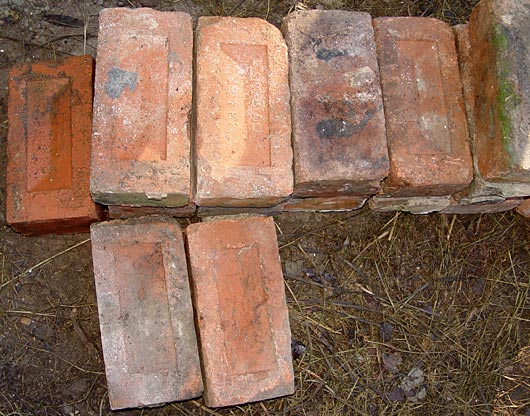 Substitute for firebricks can be old red clay solid bricks. In ovens these alternative red clay bricks will heat up, retain heat, cook, bake, roast, re-fire, absorb conduct store and hold the heat from wood fire and perform the same way as proper refractory firebricks do. If you can not locate fire bricks where you are or for any reason obtain them, Red Clay Bricks will perform much the same way in wood fire temperature levels and can be used instead.
Red Clay Bricks
How do I see it’s the right alternative for firebricks?
The replacement bricks must be of this type, old solids. Clay body is the same on the brick’s inside as it is on the outside. Break or cut one of the bricks you find in half to see what’s in the middle. New products are made out of cheap clay bodies whilst only on the outside a decorative clay slip is applied and then the bricks are fired in kiln – you couldn’t use bricks like that. The right alternate also shouldn’t be burnt, if you saw too much black-carbon color in the center don’t use such brick – it would be either over fired and brittle or made out of lesser quality clay. But a few little burnt spots will be fine. 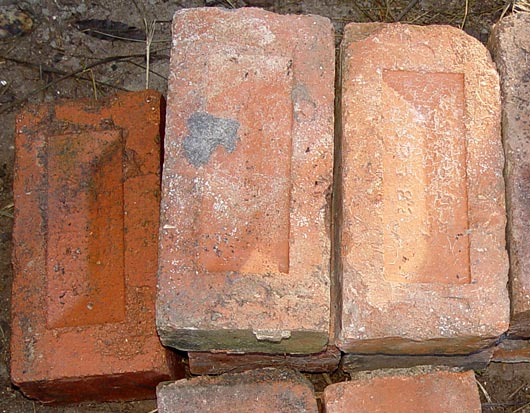 Working with red clay solid bricks is equivalent to work with refractory firebricks, all matters remain the same only bricks are different.
Where to find these old red solid bricks?
Look around in demolition yards for instance they often stock these red clay bricks. Read advertisements in papers, people very often sell for fraction of price or giveaway exactly this type of old bricks, and other great building material left over from other projects or from cleaning up. There are always few firebrick replacements to be seen here you just have to watch it. Bricks are old and in used condition with some chips and cracks, you can turn them with better side towards hot face, the oven inside. You can buy 200 to 1000 of red clay bricks even for 20 or 30 bucks in total and end up having a lucky day.
Interested in firebricks‘ physical properties (thermal conductivity table and physical properties) or the complete technical data of soapstone?
These reds have a great character in eyes of many including me. Often people wants to just get rid off them. Some sellers are obviously aware of the value and the beauty these red bricks have, and so they resell them with profits. By the way these old bricks can be easily cleaned with hammer and brush because in the past brickies didn’t add much cement into mortar if any, mostly lime was used those days.
Respond to the Old red clay solids as firebrick alternative article:
50 Comments
Sorry, the comment form is closed at this time.
… more heat than firebricks (more reading about firebricks’ thermal conductivity and alternative for firebricks.
Pingback Firebricks are actually fire clay bricks. Thermal conductivity. Cutting with diamond wheel.
Firebricks are costlier too.
By Pets blog
There is nothing better than a pizza made in a wood oven, nice tips. Thanks for sharing.
By KimdaCook
This is a great idea. Not only are you using quality bricks, but you are able to used recycled materials.
pays to live green’s last blog post: Maryland Environmental News: October 2008
By pays to live green
I absolutely love brick oven pizza, but only the best pizza’s come from a wood oven. There is just something about these very hot firebricks that gives the meal its great taste and texture.
By Kim Cooking
I got these same old red clay solid bricks from our neighbor for nothing but there were that many I can build the whole oven structure out of them. The outer color of the walls and chimney will have real character. These house bricks certainly are very easy to clean from the old mortar just as you describe, it just simply pops off from the brick when touched. Still for the firing and cooking part on the oven I am ordering new firebricks from a supplier.
By Dadina
Here in Denmark most old houses are built from those bricks, so obtaining these bricks should be no problem at all. There are even some producers still of ‘old’ style bricks that produce handmade bricks to use when in need for old houses. They could be a nice alternative if you don’t want to look at the weathered old bricks, but still want an old style looking oven.
For info only, I guess shipping them to AU, would be insane.
Lars’s last blog post: Hindbærsorbet
By Lars
I would buy used firebricks and red-clay bricks. Maybe for some purposes it’s ok but not to build anything solid.
By Odzyskiwanie Danych
I remember that my auntie made a grill from red clay bricks. She put a few red bricks one on another along two sides of the camp-fire and put a sheet metal on them. It was the simpliest grill I’ve ever seen. And the best, also.
By sernik
I am trying to locate some bricks originally made by you
it is the Brindle {Brindel} not sure of the spelling. Could you please tell me where could locate some. I am in Taunton in Somerset.
Many thanks,
Roger Rossiter
RR BUILDING MAINTENANCE LTD.
By R.Rossiter
Red Clay Bricks are awesome. I got a whole bunch of those for free from a friend recently and they really perform extraordinarily. Highly recommended.
By Dekoracja Okien
There are a lot of Red Clay Bricks in my neighbourhood. I like buildings made of red brick, but some of them need to be just washed up, cause red bricks easily catch dirt from the air.
By darmo
I have a whole lot of IFB’s ( Insulating Fire Brick of the rating K23 and K26. They are of the softer type than the solid hard type which have a maximum range of 3000 Deg F.. I do want the bricks to hold the heat for cooking the pizza and breads. Should I just use my red…solid bricks instead and just use the IFB bricks for insulation. I just don’t want to chance having my bricks spalling or something terrible like that! Please…What would be the best thing to di?
By Dean Young
Boiler red clay brick bed material and fireclay, all types of new and recycled for reusing old refractories.
By Alike red clay brick materials.
Dean , do not use your IFBs on the inside , they are great under the floor but have hardly any of the mass you want to make your oven work. Sell the extras to a potter or blacksmith and use perlite or vermiculite for your pour in insulation . if you can afford it ceramic fiber is an excellent 1st layer on top of your bricks
tim
By tim
Hi Rado,
I am a little puzzled, but also content with life. I was hoping you could educate me as to why one type of brick is better than another when building a brick oven.
Will dry-pressed solids (hope I have used the right term), which are fired at 1000˚C+, be good enough, and last a long time, when used for the cooking floor and the dome? Or should I use fire bricks? I have very limited resources, and would have trouble affording fire bricks. What do you think?
Thanks in anticipation,
Nick.
PS: Love the website.
added by Rado:
Hi Nick,
Thanks for the note. This question is often asked so I will write about it a bit extra.
Inner cooking/firing part though is most often made out of firebricks, they have the right material body and withstand reheating or continuous usage. If it’s only a decorative house brick it will not work. House bricks are mostly fired in kilns into high temperatures so they get brittle and won’t absorb water which is logical for the building purpose.
When firebricks are manufactured a completely different clay body is used, they are fired into much lower temps, they also absorb lots of water. When you dip firebrick into a bucket with water you will literally hear how rapidly it absorbs the water in because these bricks are porous. Often the old solid red-clay bricks described above are being used for this purpose as alternative instead of proper firebricks and they work fine.
Like an unglazed bisque clay but strong, these reds absorb water as well. They perform well in this temperature range. However, they should be the correct clay type (real old type clay solids not an imitation for a clay), so the material won’t start pealing down in the heat and continuous reheating as per using the oven.
HOWEVER I know of also house bricks produced now-days that are suitable alternates for firebrick for building wood fired ovens, and come at 3 times lower price. E.g. are the Midlands cream color solid bricks produced in WA (I must place a picture of them here – DONE, scroll to comm No. 33 for this Midland clay brick close up image.)
If you knew of some brick type thinking they could be used, or if you are offered some bricks, first cut or brake one in half, wash any dust off with water and look for a white coarse sand in the clay body. You cannot miss to see this sand in. Also they should have NOT: color slip applied on the outside (usually up to 5mm – 1/4″ deco clay slip thickness whilst the inner main brick body is made out of a cheap stuff) and they should not be burnt in the middle at all, usually seen as black carbon color. The bricks must be made from correct clay, NOT from cheap material or masonry like cement based.
So, the part of the oven that faces the heat should be built out of heat resistant clay bricks, and the outer parts of the oven can be normal house bricks, blocks, stones, etc.
By Nick
Here in the States, the Germans who settled in Pennsylvania, brought with them the custom of baking in a ‘full-arch’ brick, and lime mortar wood fired oven. They are commonly called ‘squirrel tail’ ovens, since they were build on the outside of the back of a ‘walk-in’ fireplace. The ‘squirrel tail’ is really the flue that is placed in the back, away from the from arched brick door opening. The flue then arches over from the rear to the front, and about 5-7 courses above the opening. This facilitates the passage of smoke above the face of the user. The usual height was about 70″/179cm. A large brick was used to close off the flue, once firing temps were reached, and the ashes went down a specially placed loose brick just inside the oven door arch. The ash pit was then used to collect/store them for future use in soap making..(‘potash’..!). I can answer specific questions thru the aforementioned website. Thank you.
By mik
Lucky you, if the old mortar just “popped off”!!! My husband and myself spent hours trying to remove the mortar cleanly from the red bricks we have. What a mission!! We even got hold of some acid, which still didn’t remove the mortar, but at least the red came up brighter. It is in our experience, a pig of a job!
By Cleaning Old Red Bricks
I am from South Africa. Can you maybe tell me who in South Africa sells this firebrick product with the relevant Contact Details.
Tx
Jacques
By Fire Bricks
Hi guys,
I am finding it real hard to locate any of these red clay bricks in Sydney. Does anyone know where I can get them? Is there a sure way to know if they are the right bricks? A few places I have called have asked me to come and see (they seem more confused than I am) – but I am not sure exactly what I am looking for.
cheers,
Mil.
By Cant find these bricks anywhere
I used a mix of new and old but pure clay pavers, only pavers were used for wood oven I built according Rado’s masterly tail design dvd with the construction plans, and it works fantastically well. The pavers get perfectly hot and conduct and retain heat as firebricks would I suppose.
Anyone knows where to locate the old railways timber sleepers in Victoria? I plan to recycle them into an outdoors furniture.
By Pavers used for wood oven.
What type of pavers did you use? Can you please identify them? Are the pavers differed to Red Clay bricks?
I am so confused.
By Can't find these bricks anywhere
Hi there,
Thanks for the great tips. I was worried about the cost of firebricks as such I am pretty happy to hear that the old red clay bricks will do the job.
One question I have is in regards to the mortar I should be using to mortar the old red clay bricks. In my case, you wont see the brickwork as it will be inside the oven, hence the colour is not an issue. I am concern that my mortar mix may crack up and all my hard work will be to no avail.
I would appreciate any tips. Thanks again, Jason.
PS. or am I best to dry stack the red clay bricks where possible????
added by Rado:
Hi Jason,
In the firing chamber I dry stack bricks in the hearth floor and in walls also. In such a case where bricks have uneven dimensions, or if they are slightly chipped damaged, a very thin heat resistant mortar application is used to fix the differences. For this fix it’s better when premix refractory mortar is used because the type can be very thinly spread onto the bricks without drying up fast. When comparing it to a fireclay based mortar (with sand plus lime mixed in or plaster), which is better for thicker applications (but bricks need to be soaked in water before working with fireclay based mortar.) Premix commercial does not cost a lot at all per 1 bucket, also very little of it used used up on one oven job, less than one bucket. You could use it with the recycled red clay bricks as well, also in arches if you are concerned; up to the point where the “V” gaps between bricks in arches get wider. Up to one 3rd or one half roughly. The rest can be wedged with brick fragments pushed into the mortar, not sparingly, rather many fragment pieces – the more of them goes in the better as there will be again less mortar in the gap. Or quick cut little wedges with diamond wheel. Is that what you needed? Have you seen these pages: firebrick arches?
By Jason
Cheers Rado, great info there, much appreciated. I’m looking forward to having a go and I will let you know how I go.
Just one thing actually, I’m guessing there is no need to soak the old red clay bricks in water before using the premix commercial refract mortar, or would recommend doing so.
Thanks again. Cheers, Jason.
added by Rado:
Hi Jason,
Sure, with commercial premix, an Air-Set type products, you can spread the mortar straight on the dry bricks. No need to soak the bricks in water nor wet with water. Just make sure you thoroughly mix the mortar content before use, all the way from the bottom of the container in which you buy it. It’s important to mix it well.
Also, read the directions of use on the bucket, as these mortar products differ a lot (in case as someone might be selling a natural clay based mortar).
By Jason
Hi guys,
I am having trouble sourcing premix commercial refractory mortar here in Adelaide. Traditional brick ovens stock it here in Kent Town but its $60 for a 25kg bag. Is that the norm???
Hey thanks again for all the suggestions Rado.
Cheers
Jason
added by Rado:
Hi Jason,
The price will be very similar elsewhere. You will only use one bag of this mortar. I buy already premixed fire resistant mortar in bucket roughly at $40, and that amount is plenty for 2 ovens.
By Jason
[…] Super Excited to start new project. Not to beat a dead horse but check this out. Alternative for Fire Bricks are these old solid red clay house bricks. Firebrick substitution for something cheaper. If i am able to use clay bricks it would cost 3 times … Forno Bravo : The Wood-Fired Oven Community […]
Pingback Super Excited to start new project
Refractory fire bricks are capable of sustaining intense heat and without fusion nor deterioration at or around their operating temperature. Fire bricks usually contains aluminum oxide and silicon dioxide but most known silica and alumina compounds. The manufacturing process involves baking the bricks in high temperature industrial kilns, which themselves have firebrick linings on the hot face, to create a vitrified ceramic or refractory products.
By Fire Bricks
Found mostly in brick alike rectangular shapes, these clay bricks are used to build the hot-face interiors for pits, low heat furnaces and many indoors or outdoors ovens. As these clay bricks are somewhat heat resistant as well, they are quite useful to build fireplace hearths in homes and outdoor areas.
By Fire Bricks
Do you have to use a firebricks to build the cavity of the oven?
Can I build the cavity from clay or refractory over a sand dome instead of the bricks.
And then put second layer of dirt and clay mix as an installation and then finish with the cement layer. Would that contain the heat and be safe to bake in the oven?
Appreciate it if someone would have an answer.
I already built a cavity an inch and a half thick mixing sand and a heat resistant mortar SPEC and clay powder 6-2-1% but it doesn’t look strong so I stopped. Waiting for an answer please.
By Nathan. Building oven cavity
What is the maximum temperature that this type of brick can withstand?
By JD Bunn
I want to build a rumford style fireplace and do not like the look of fore brick. I have access to some old brick that is orange red that came from the exterior of a home built in early 1800’s. I am not clear from the posts if I can use this brick for the interior of my fireplace. Should I just use new brick? I want the rumford to be authentic. Dan
By D Benware
Hi Dan,
Interesting, I agree with you these old red bricks have the proper character and they look very nice indeed. What sort of heat do you achieve in the Rumford fireplace kind? How does it look, is it an opened fireplace design.
If it gets properly very hot inside, then these bricks should be the right kind to withstand it. Can you cut one of the bricks in half, wash the dust off with water and see whether the clay body contains some white sand or pebbles. Also note if there is some discoloration happening towards burned carbon color. Or whether the bricks are made from just one clay or two clay types. This information can be easily seen from the cut brick profile and recognized. You can photograph this, email us some nice/sharp close up photo of the brick body, I will have a look at it.
By Rado
My source for the old brick came from a home built in mid 1800’s. They were exterior brick, I’d like to utilize these in a firebox for a Rumford fireplace. I am going to break my sample brick in half, wash it and see what I have. Will report back. Thanks so much.
By D Benware
OK, I just broke the brick in half, there are no burn marks, color is uniform with some white specs in it. What do you think about using this brick in fire box and surround? Will it hold up and not crack or shale off in time in the heat conditions?
By D Benware
Ok, now I placed the brick in water. It is absorbing the water like crazy. Lots of bubbles. Like alka seltzer tablet, not quite. What does that mean?
By D Benware
Hi Rado. Thanks for putting so much information on your site. I have litterally spent hours reading everything. I have a query re using the midland brick smooth solid cream brick. I have been told that they sell heaps of these bricks for wood fired pizza ovens and they never have had any problems. Can you confirm, in your opinion if this is accurate (ie they are fine for a domestic wfo) and why these are suitable. I am on a tight budget and fire bricks as you mentioned are 4 to 5 times the price. Thanks John
By John
Hi John, and other builders.
Here is the photo of the Midland solid clay brick. As mentioned previously. You can see their clay body is nearly the same as with firebricks. Notice the white pebbles inside and the texture. Same solid matter everywhere (without presence of any cheaper clay inside and also no carbon color.) Many ovens were built using these bricks instead already. Secondly, I have noticed that the company suggests these bricks to oven builders for years, now, for the use instead of firebricks for the oven conditions (I don’t think they would take any risk with these bricks otherwise.) I have heard only positive information about these bricks.
Have a look also at this page, the oven is built from similar bricks, it is located in NSW by the way 4,000 Kilometers = 2,485.5 Miles away, slightly different color shade of the clay on these bricks; Solid clay bricks used instead of firebricks.
By Rado
Hi there,
Just a quick question,
are there any health and safety laws that state whether or not it’s safe to use old red bricks instead of fire bricks in a pizza oven?
I ask because I was volunteering and building an oven at my local community center to save them hiring someone to build one, when it came to finding firebricks I came across this site and suggested it to the project leader, he seemed to think that health and safety wouldn’t be happy with using old red bricks, this sparked a bit of a row as old red bricks start their life in a hot kiln & have been used for chimney stacks and hearths for centuries, if someone could email me back and clarify the health & safety status I’d be most grateful.
Kind regards.
By Stu
Hi Stu,
Quite a good points risen.
I would want to see whether there are regulations on this. There certainly is health and safety regulations when it comes to food so e.g. hygiene and toxic problems and such dangers are completely eliminated, which is great to have! But in ~10 years I haven’t come across this old red clay brick in connection to health matters. It is clay, like with pottery and similar clay products like firebricks. However, if the clay bricks came from a kiln or a furnace or incinerator where toxic or in any way unhealthy material came into contact with the clay bricks, for instance burning waste or heating chemicals (not just hazardous), or if the brick were manufactured in a way that some unhealthy stuff was mixed into the clay body (I haven’t herd of this though – who would do that? … unless the intend was justified for a specific industrial reason), then the bricks can well be contaminated therefore not suitable for contact with food for consumption (especially for public) nor even for heating. You would need to know whether the clay is clean. Not all bricks could link to a safe environment and/or previous usage in safe environment. How about have it tested in a lab first for the peace of mind in your team?
Also, not all new firebricks are suitable for food, there are specific industrial firebrick types for withstanding in acid atmosphere and similar applications.
By Rado
I have red brick from a hundred year old home, but they are a solid rectangle and do not have the indentations like the bricks in your pics. Will my bricks work?
Also, I am going to use my brick in an old cast iron potbelly stove to help heat my home. Any advice on how to stack them would be greatly appreciated. I was just going to stack the brick up the sides of the stove on top of each other.
Oh, and my brick did come from a chimney that I took down.
By Penny Neiman
Hi wondering if I can use red clays or fire bricks with Normal mortar mix in between. For the first layer of my oven. Then use fire blanket followed by another layer of reds with normal mortar mix then plaster? Do you think standard mortar mix will cope with the heat? Or should I use fire cement for at least the first layer. Thanks great info.
J
By Jay
Thanks for all your help and inspiration Rado. I have botched together my own version based on the designs and details of many other self build bloggers. My oven was made entirely out of reclaimed (free!) materials with my only purchases being: sand, cement an angle grinder and a wheelbarrow. To answer Jay’s question; I have used clay bricks and regular mortar. However, I tried not to have any mortar exposed on the inside if that makes sense. Where possible I angled the brick so that the mortar had a space at the back. Much easier for the dome. I have put a link to my page in the reply field. Thanks again Rado – you rock!
By Julian Keith
I have just had an old 7 mtr brick large garage demolished. The bricks are reddish rather than yellow and solid. Builders say they are excellent.
Do you want to give me a price. Ellerslie, Auckland
Many thanks
Chrissi Bollard
Barfoot & Thompson Greenlane
By Chrissi Bollard
Thank you for all the information you have on this site. One of the best I have found. Still looking around but I do not see anything about the floor (cooking surface) of a pizza/bread backyard oven.
I recently recovered some hand carved granite fireplace blocks from a home built in 1920. They are 4 to 6 inches think and I was considering cutting them one side smooth and using them on the floor of my oven.
Will 4 to 6 inch granite stone be acceptable to line the floor of the oven?
Additionally another thank you … After reading your information on the Red Brick I will be using used red brick I recovered from a demolished home for the inside of my oven … thank you again … you saved me money.
By Robert Keeran
I have another question in addition to previous #45 above.
After reading I found that the less motor we use in building the inside of the over the better so we plan on cutting the brick to fit them as close as possible in our dome so on the inside, as much as possible, only brick will show.
Because of the hand cut nature of the Granite bricks in #45 above I will have to motor these together on the cooking surface, place them kind of like a puzzle on the cooking surface. Will small joints of refractory motor on the floor of my oven work or should we consider cutting 5 sides to square them up and provide a flat cooking surface with little or no cracks to motor?
By Robert Keeran
Read this thread. I would avoid using granite. Humans have cooked with rocks a couple a number of ways since the discovery of fire but natural rock can have the potential to split, crack, or explode possibly.
By Bob
I just built an oven in my backyard using old red bricks that some guy was giving away for free. Beautiful, rustic look–reminds me of an 18th century Middle Eastern brick oven. Anyway, these bricks can surely withstand the heat without the high cost of a fire-brick at about $3 a piece!
By Sam
Good evening everyone>
I am starting a back yard projetc (42″ Pompeii Pizza oven) I do have a lot of red clay bricks, that came out from a demolition work, I need advise on how to mix a good mortar.
Should I use Portland cement in to the mixture?
What will be the correct mixture for this project?
I would like to leave the Dome bricks exposed on the opened, we really like the look of visible bricks, will that be a problem?
Thank you
Luciano / Florida
By luciano
Do not use portland cement in oven building mortar. Use coarse sand and fireclay to make your mortar instead. 3 shovels of sand and 1 of fireclay. The portland cement will not take the heat of the fire, and will attract moisture which can cause cracking. Fire clay is available in 50# bags at most bigbox hardware stores, or if available you can use excess clay from a pottery maker in your area.
By David
I am a 3rd generation mason, my grandfather never used firebird. In a fireplace, my dad did use some firebird in fireplaces, rather than try to convince customers otherwise. I do not like the look of firebird and only used them when required by inspectors. I am currently building a pizza oven for myself and am using red brick pavers. If standard size they should be solid and weigh 7 lbs apiece
By Larry kern